
Essential Deer Collision Safety Tips for Ohio Drivers
Shorter days and increased wildlife movement can create challenging driving conditions during the fall months. Deer are especially active this time of year, and understanding how to stay alert, reduce risks, and respond safely after a collision can make a meaningful difference. This guide walks through practical strategies for avoiding deer on the road and explains what to do if an accident happens.
As a long-standing Ohio insurance agency, Rathweg Insurance Associates, Inc. is committed to helping drivers stay informed and prepared. Whether you rely on auto insurance, home insurance, or other protection through our agency, we want to help keep you safe throughout deer season.
Why Deer Activity Increases in the Fall
During the late fall months, deer are far more active, particularly from October through December. Their increased movement often brings them closer to busy roads at times when visibility is naturally limited. Reduced daylight, combined with their seasonal behavior patterns, creates circumstances where drivers encounter deer more frequently.
Many of these encounters occur around dawn, dusk, and in the hours immediately following sunset. These dim-light periods make it difficult for drivers to spot animals near wooded edges, tall grass, or narrow shoulders until they are already close to the roadway.
Because deer can step into traffic with little warning, staying attentive during these hours is one of the most reliable ways to lower the chance of a collision.
Stay Alert in Areas Where Deer Are Common
One of the most effective ways to reduce the risk of hitting a deer is to stay aware of your surroundings. Instead of focusing strictly on the road straight ahead, try scanning both sides for any hint of movement. This habit can give you more time to respond safely.
This extra attention is especially important while traveling near wooded regions, open fields, rural routes, or areas marked with deer crossing signs. These markers are placed intentionally to remind drivers that deer commonly travel through those zones, making it a smart time to slow down.
Cutting back on distractions—such as mobile devices, loud music, or multitasking—gives you a better chance of reacting quickly if an animal suddenly crosses your path.
Lower Your Speed to Improve Reaction Time
Driving at a safe and reasonable speed becomes even more important during peak deer season. Slowing down allows you to better identify hazards, apply the brakes smoothly, and maintain full control of your vehicle.
Reduced speed is particularly helpful along two-lane roads, rural routes, and highways bordered by open fields or wooded terrain. These areas are common habitats for deer and tend to present more unpredictable conditions for drivers.
Even a small reduction in speed can provide crucial extra seconds that may help you avoid a collision altogether.
Make the Most of Your Headlights
Proper use of your headlights can significantly improve nighttime safety. When driving on dark roads without oncoming traffic, using high beams can expand your field of vision and help you spot animals earlier.
However, once you see a deer in or near the roadway, guidance often suggests switching to low beams. Bright light may cause a deer to freeze in place instead of moving away, making the situation more dangerous.
Using your headlights thoughtfully can enhance visibility without startling wildlife unnecessarily.
Expect More Deer When You See One
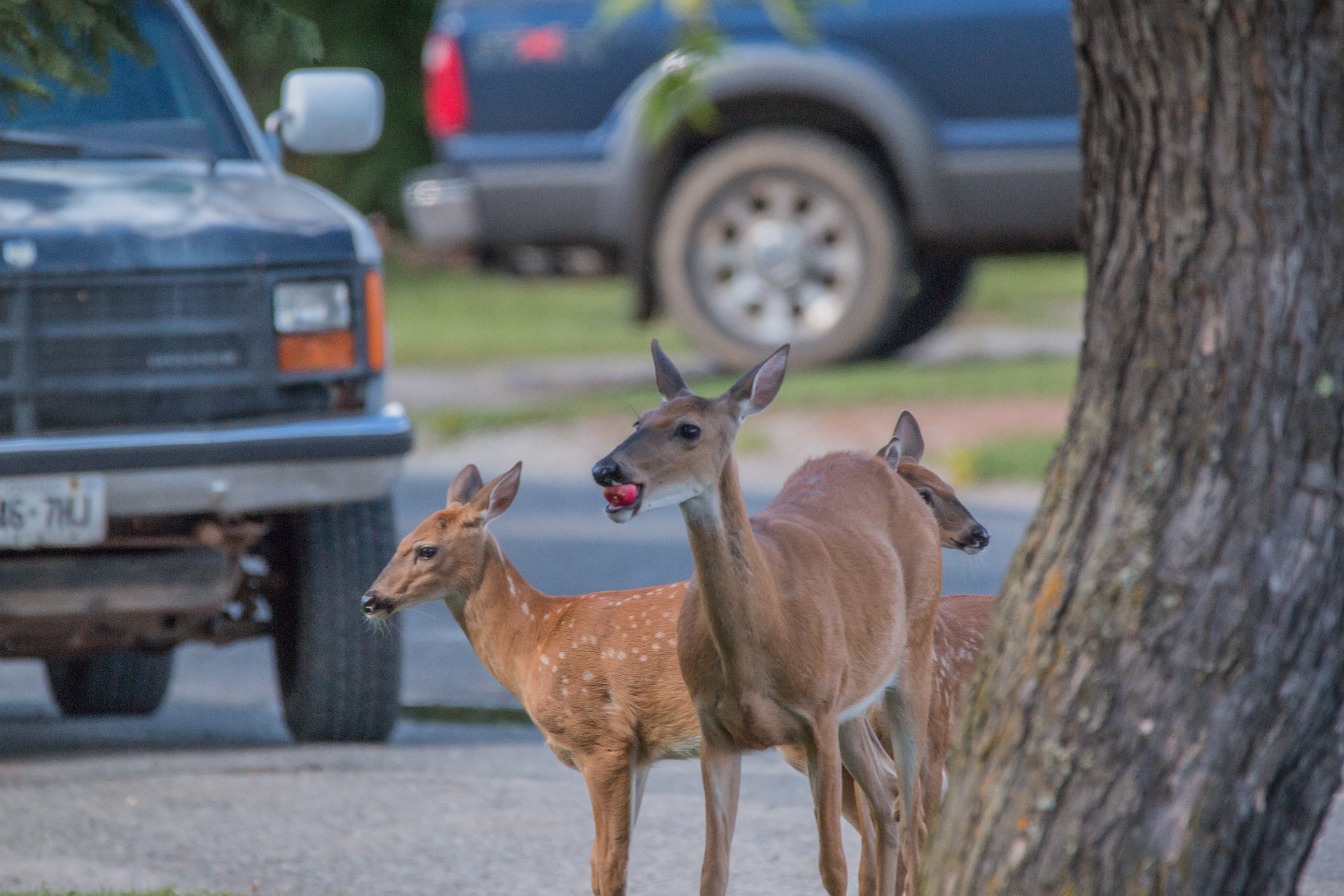
Many people assume the risk disappears once a single deer crosses the road. In reality, deer frequently travel in small groups and may cross the roadway one after another.
Rather than speeding up immediately, continue slowing down and keep scanning both sides of the road. Another deer may appear moments later, often following the first.
Taking a little extra time before accelerating can help you avoid a second surprise encounter.
Brake Firmly Instead of Swerving
When a collision seems unavoidable, a driver’s instinct may be to swerve away from the animal. Unfortunately, swerving can create significantly greater danger than braking in a straight line.
Sudden lane changes can lead to collisions with oncoming cars, roadside barriers, trees, or ditches. These impacts often cause much more serious damage and injury than hitting the deer itself.
In most situations, the safer response is to keep both hands on the wheel, maintain your lane, and apply the brakes in a controlled manner.
Be Cautious About Relying on Deer Whistles
Some drivers install whistles or similar devices designed to deter deer, but these tools should not be considered a substitute for safe driving habits. There is no guarantee that wildlife will react to these devices as intended.
Your best protection remains attentive driving, slowing down in high-risk areas, and scanning the surrounding environment. Using the horn may help encourage a deer to move, but staying focused is still the most effective defense.
What to Do After Hitting a Deer
Despite every effort, collisions can still happen. If you strike a deer, your safety should be the first priority. If your car is drivable, pull over to a safe area as far from traffic as possible and turn on your hazard lights.
Check yourself and anyone in the vehicle for injuries. If anyone is hurt or requires medical care, contact emergency services right away. Depending on your location, you may also need to notify local authorities.
Avoid approaching the animal, even if it appears immobile. Injured wildlife can react unpredictably and may pose a danger.
When it is safe, take photos of your vehicle’s damage. These images can be helpful when you file a claim through your auto insurance provider.
How Auto Insurance Handles Deer Collisions
Many drivers are surprised to learn that hitting a deer is usually handled differently than other types of accidents. Damage resulting from striking an animal is commonly paid under the comprehensive portion of an auto insurance policy rather than the collision portion.
Drivers who carry only liability insurance generally do not have coverage for repairs to their own vehicle. Because policies vary, it is important to understand what your coverage includes—before an accident occurs.
As an Ohio insurance agency with more than a century of experience, we help drivers review their coverage so they know where they stand. Whether you rely on us for auto insurance, home insurance, business coverage, contractor insurance, or specialized policies such as HVAC insurance, NEMT insurance, or fire sprinkler insurance, our team is always here to assist.
If you have questions about your protection or want to review your policy, we are happy to help you stay prepared throughout deer season and beyond.